Share Clarence "Smitty" Smith Jr.'s obituary with others.
Invite friends and family to read the obituary and add memories.
Stay updated
We'll notify you when service details or new memories are added.
You're now following this obituary
We'll email you when there are updates.
Select your format and elements to print

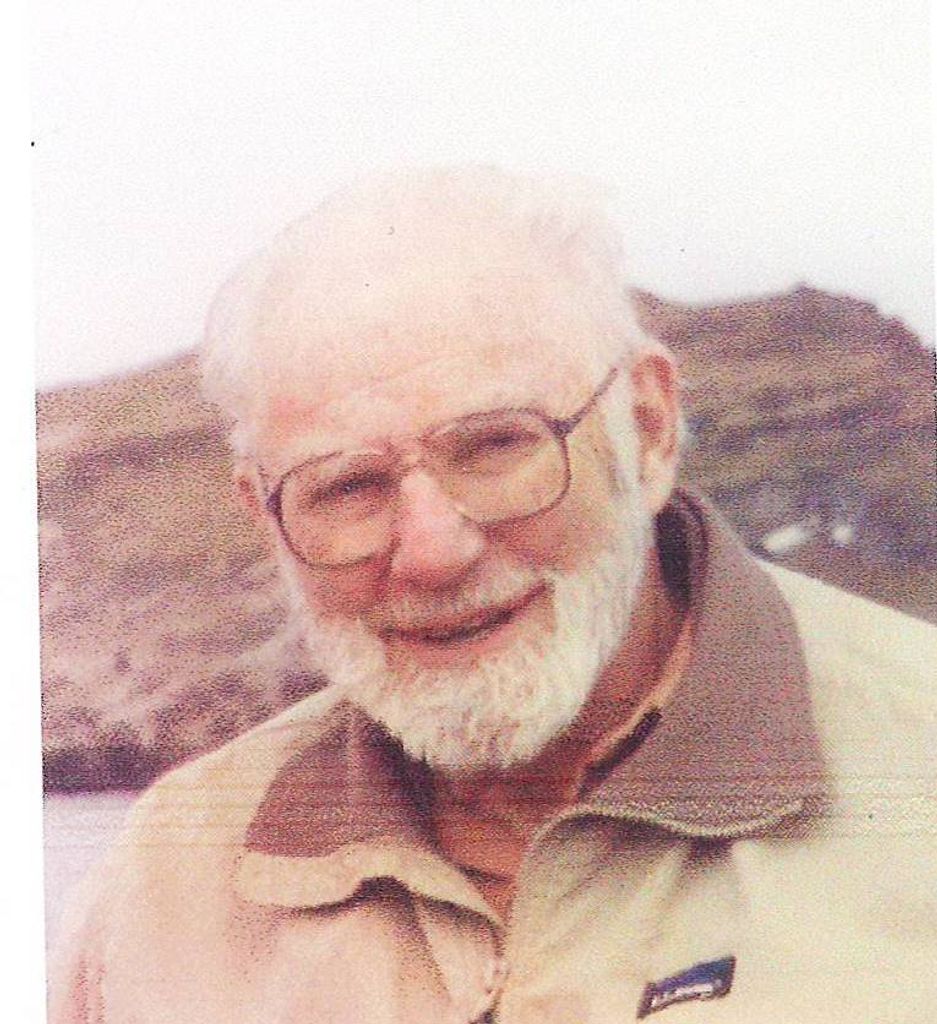
In Memory Of
Clarence "Smitty" Smith Jr.
1927
2015


Clarence "Smitty" Smith Jr.
Dec 19, 1927 — Feb 10, 2015
Dr. Clarence Lavett Smith, Jr. (Smitty) passed away on February 10, 2015 in Fort Collins, Colorado at the age of 87 after a year-long illness. He is survived by his wife of 60+ years Marjorie A. (Maple) Smith of Fort Collins, son Robert Lavett Smith of San Francisco, daughter Laura S. Bales, son-in-law James E. Bales, and grandchildren Brian E. Bales, Michael J. Bales, and Sarah A. Bales, all of Fort Collins. He was preceded in death by his daughter-in-law Patricia E. (Lewis) Smith of San Francisco. In accordance with his wishes, no viewing or service was held before cremation. His ashes will be buried at a later date in Hamburg, New York.
Smitty grew up in Hamburg, NY, the only child of Clarence Lavett Smith and Mildred L. (Gaeckle) Smith. The family lived in town but owned a nearby farm where Smitty worked throughout his childhood. He was active in Boy Scouts, attaining the rank of Eagle Scout and serving as a scout leader. He graduated from Hamburg High School, received his BS degree from Cornell University, MS degree from Tulane University, and Ph D from The University of Michigan. He served in the Army Medical Corps at Walter Reed Hospital in Washington, D.C. and the Tropical Medical Research Laboratory in San Juan, Puerto Rico.
Smitty's career was in the field of Ichthyology. He was a curator at the American Museum of Natural History in New York (1962 to 1997) and also taught at numerous universities, including Ohio State, Michigan, Oklahoma, Alabama, Hawaii, Guam, City College NY, CW Post, and other universities in the New York area. In addition to his 35 years at the American Museum he spent a total of 18 summers over five decades at Ohio State's F.T. Stone Lab on an island in western Lake Erie. Most of his summers were spent teaching at biological stations. He also did research at marine laboratories in several tropical locations, especially at the American Museum's Lerner Marine Laboratory in the Bahamas and the Smithsonian's Research Station on Carrie Bow Cay, Belize. He specialized in the study of coral reef fishes, especially in the Caribbean and Pacific, and of the freshwater fishes of New York State and the lower Great Lakes. He also studied fossil fishes and did extensive work on larval fishes. His research took him to coral reefs around the world and he participated in several research expeditions including the one that discovered the cannons abandoned by Captain Cook on the Great Barrier Reef in Australia. Smitty did scuba diving for his marine research and lived in several of the early underwater habitats, such as the Tektite Program and Hydrolab, submerged on coral reefs and studying the behavioral ecology of the reef's fishes. At the museum he was involved in the discovery that the primitive living-fossil Coelecanth does not lay eggs as was previously supposed but, surprisingly, bears its young alive.
Smitty's adventures while at the American Museum were not restricted to research and study. He and his wife hosted more than 20 of the museum's natural history themed tours and cruises, some to remote areas of the world, where he lectured on the fish of the region. On these cruises he also led snorkeling excursions on tropical coral reefs throughout the Caribbean, French Polynesia, Indonesia, and other parts of the world.
Smitty wrote more than one hundred scientific books and papers pertaining to fish. He was a skilled artist and drew many of his own scientific illustrations. After his retirement he also wrote several ichthyology-themed mystery novels, which he never published. He was a member of numerous scientific societies, natural history organizations, New York Explorer's Club, as well as organizations for the study and conservation of the Hudson River. He was also involved in several community education and conservation activities, including serving on the boards of the Closter Nature Center in Closter, New Jersey, the Museum of the Hudson Highlands in Cornwall, New York, Hudsonia Ltd. in Annandale, New York, and the Western Museum of Mining and Industry in Colorado Springs, Colorado, the home of Marge and Smitty after he retired. He received numerous awards for his many professional achievements and contributions.
Smitty lived a very full and productive life and loved his work. He delighted in sharing his knowledge with his students, both at the undergraduate level and the many graduate students whom he trained. He was always eager to learn and had vast knowledge of a wide range of subjects. He enjoyed extensive travel worldwide, usually in the company of his wife, and making furniture or gadgets in his woodworking shop at home. He was an avid reader with inexhaustible curiosity about everything and this led him to develop many diverse skills from blacksmithing to boat building and sailing. His other non-career interests included photography, geology, navigation, astronomy, mathematics, wildflower identification, bird watching, hiking, tent camping, fly fishing, sketching, attempting to learn to play piano, and travel. The latter included driving throughout the country and twice to Alaska to explore almost every road there that could be driven, even above the Arctic Circle.
Smitty had a happy life and a relatively peaceful death, and leaves his family with wonderful memories. He had many friends including co-workers, fellow scientists, former students, neighbors, and friends from as long ago as high school and college. He was loved and admired by many, and that is a fitting tribute to a remarkable man.
Smitty grew up in Hamburg, NY, the only child of Clarence Lavett Smith and Mildred L. (Gaeckle) Smith. The family lived in town but owned a nearby farm where Smitty worked throughout his childhood. He was active in Boy Scouts, attaining the rank of Eagle Scout and serving as a scout leader. He graduated from Hamburg High School, received his BS degree from Cornell University, MS degree from Tulane University, and Ph D from The University of Michigan. He served in the Army Medical Corps at Walter Reed Hospital in Washington, D.C. and the Tropical Medical Research Laboratory in San Juan, Puerto Rico.
Smitty's career was in the field of Ichthyology. He was a curator at the American Museum of Natural History in New York (1962 to 1997) and also taught at numerous universities, including Ohio State, Michigan, Oklahoma, Alabama, Hawaii, Guam, City College NY, CW Post, and other universities in the New York area. In addition to his 35 years at the American Museum he spent a total of 18 summers over five decades at Ohio State's F.T. Stone Lab on an island in western Lake Erie. Most of his summers were spent teaching at biological stations. He also did research at marine laboratories in several tropical locations, especially at the American Museum's Lerner Marine Laboratory in the Bahamas and the Smithsonian's Research Station on Carrie Bow Cay, Belize. He specialized in the study of coral reef fishes, especially in the Caribbean and Pacific, and of the freshwater fishes of New York State and the lower Great Lakes. He also studied fossil fishes and did extensive work on larval fishes. His research took him to coral reefs around the world and he participated in several research expeditions including the one that discovered the cannons abandoned by Captain Cook on the Great Barrier Reef in Australia. Smitty did scuba diving for his marine research and lived in several of the early underwater habitats, such as the Tektite Program and Hydrolab, submerged on coral reefs and studying the behavioral ecology of the reef's fishes. At the museum he was involved in the discovery that the primitive living-fossil Coelecanth does not lay eggs as was previously supposed but, surprisingly, bears its young alive.
Smitty's adventures while at the American Museum were not restricted to research and study. He and his wife hosted more than 20 of the museum's natural history themed tours and cruises, some to remote areas of the world, where he lectured on the fish of the region. On these cruises he also led snorkeling excursions on tropical coral reefs throughout the Caribbean, French Polynesia, Indonesia, and other parts of the world.
Smitty wrote more than one hundred scientific books and papers pertaining to fish. He was a skilled artist and drew many of his own scientific illustrations. After his retirement he also wrote several ichthyology-themed mystery novels, which he never published. He was a member of numerous scientific societies, natural history organizations, New York Explorer's Club, as well as organizations for the study and conservation of the Hudson River. He was also involved in several community education and conservation activities, including serving on the boards of the Closter Nature Center in Closter, New Jersey, the Museum of the Hudson Highlands in Cornwall, New York, Hudsonia Ltd. in Annandale, New York, and the Western Museum of Mining and Industry in Colorado Springs, Colorado, the home of Marge and Smitty after he retired. He received numerous awards for his many professional achievements and contributions.
Smitty lived a very full and productive life and loved his work. He delighted in sharing his knowledge with his students, both at the undergraduate level and the many graduate students whom he trained. He was always eager to learn and had vast knowledge of a wide range of subjects. He enjoyed extensive travel worldwide, usually in the company of his wife, and making furniture or gadgets in his woodworking shop at home. He was an avid reader with inexhaustible curiosity about everything and this led him to develop many diverse skills from blacksmithing to boat building and sailing. His other non-career interests included photography, geology, navigation, astronomy, mathematics, wildflower identification, bird watching, hiking, tent camping, fly fishing, sketching, attempting to learn to play piano, and travel. The latter included driving throughout the country and twice to Alaska to explore almost every road there that could be driven, even above the Arctic Circle.
Smitty had a happy life and a relatively peaceful death, and leaves his family with wonderful memories. He had many friends including co-workers, fellow scientists, former students, neighbors, and friends from as long ago as high school and college. He was loved and admired by many, and that is a fitting tribute to a remarkable man.
To send flowers with our preferred florist or plant a memorial tree, please visit our flower store.
Guestbook
Visits: 1
This site is protected by reCAPTCHA and the
Google Privacy Policy and Terms of Service apply.
Service map data © OpenStreetMap contributors