Share Francis "Frank" Kekahbah's obituary with others.
Invite friends and family to read the obituary and add memories.
Stay updated
We'll notify you when service details or new memories are added.
You're now following this obituary
We'll email you when there are updates.
Select your format and elements to print
In Memory Of
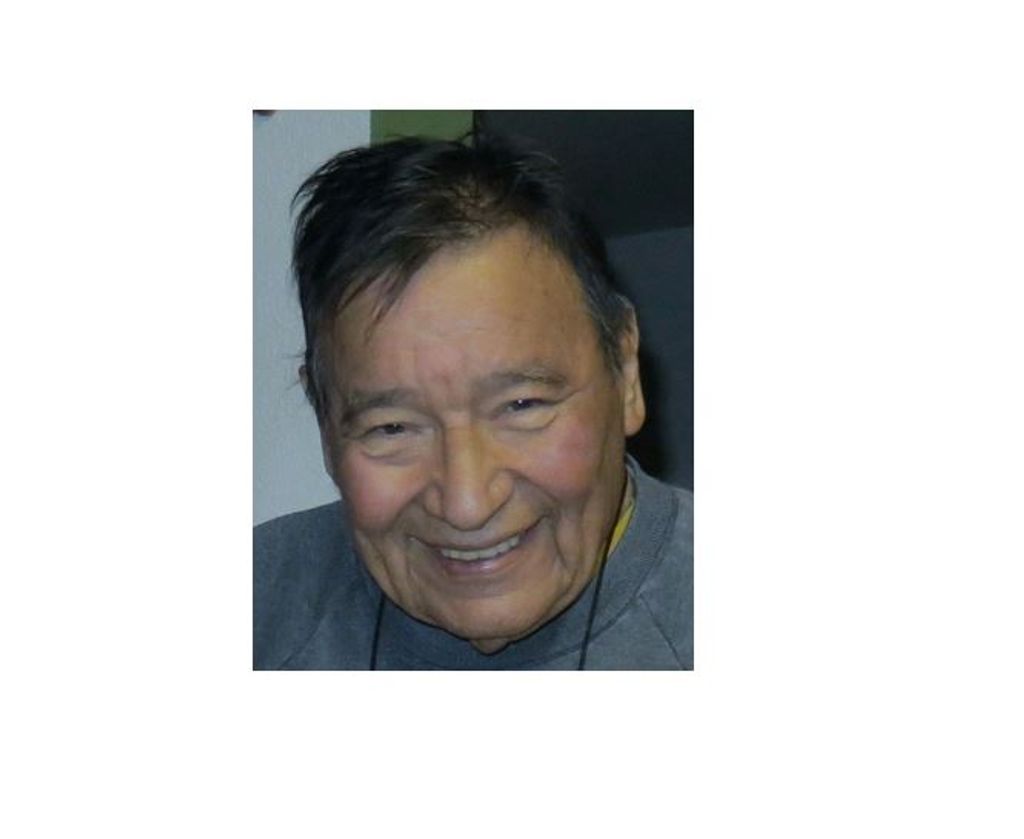
Francis "Frank" Kekahbah


Francis "Frank" Kekahbah
d. Dec 15, 2022
Francis (Frank) M. Kekahbah, age 86, died at his Fort Collins home on December 15, 2022 due to chronic congestive heart failure and kidney failure. Frank had suffered a severe heart attack in 2004; he was tough and lived much longer than the doctors expected.
BACKGROUND AND YOUTH
Frank was born in Oklahoma. He spent his earliest years on the Potawatomi reservation in Mayetta, Kansas, and his childhood in Tulsa and Pawhuska, Oklahoma. He was a member of the Kaw Nation (aka Kansa, from which the state Kansas is named) and the Potawatomi tribe. He is descended from the same Potawatomi and French family as the "world's greatest athlete" Jim Thorpe. He was also of Irish descent and after a bit of bad luck, he'd proudly declare that it was "the luck of the Irish". One of Frank's fond memories was a game he and his siblings played with their dog Grover. Each kid would run a lap around their house and then trade off so that Grover could, without even a pause, continue chasing whichever kid was running. He attended Indian Camp School, a two-classroom school, on the Osage reservation in Pawhuska. If he or his friends had any spare money (grandma sometimes gave him change), they'd buy snacks at the corner store; one treat was to dump a small bag of peanuts into a bottle of orange soda pop. His first job was delivering papers on his bike. He saved up to buy a "cool" pair of goggles, which he then wore while riding his bike. Frank and his brothers and friends scared each with stories about "Hairy Man", the local boogeyman who was rumored to roam nearby.
HIGH SCHOOL YEARS
Frank was sent off to high school at Chilocco Indian Agricultural School, a boarding school for Native Americans on the northern border of Oklahoma. His teachers in Pawhuska encouraged Frank to go to Chilocco because then his mother would have "one less mouth to feed." The founding purpose of American Indian boarding schools was to Christianize and "civilize" (eradicate the native language and culture) American Indians. A rigorous military discipline enforced the strict rules: students were given an English name, not allowed to speak their native language, and were required to perform harsh chores and domestic work for school upkeep. Students worked off demerit points in the "rock pile" by breaking large boulders into construction material for Chilocco's buildings.
Frank's father also attended this school from 1920 – 1928, (age 12-20), majoring in poultry. By the time Frank attended in 1950 -1954, Chilocco had been reformed; most of the staff and teachers were themselves Native Americans and the students were fed well and treated well. It did remain a vocational school and was largely self-sufficient, producing their own food. Frank's chosen vocational training was house-painting.
The first year at Chilocco, he was home-sick and often hitch-hiked the 65 miles home on the weekends. Many of Frank's reminiscences in later years were of good friends Snowball and Oscar and their times at Chilocco; they'd sneak off campus and hitchhike to town and buy soda, candy, and go to the movies. He also played football, basketball, and ran track. He quit track for a short time because it was "too much work and no glory", but discovered that running track was easier than "socializing" (talking with girls). At the end of each summer, Frank would spend most of his job earnings at J. C. Penney to buy his clothes (Levi's and a shirt for school) and a fashionable suit for school dances, socializing, and school pictures. "One button row, baby", a powder blue suit and a "snazzy" yellow suit. Frank worked road and bridge construction his last summer at Chilocco and bought his first car with a classmate.
MILITARY SERVICE
After high school graduation, a short stint at a furniture factory in Texas, and no prospects of a job, he joined the U.S. Army to take advantage of the "three hots and a cot." Impressed by a recruiting poster of a soldier wearing a sharp-looking uniform with a girl on his arm and parachutes coming down in the background, he enlisted as a paratrooper. He was persuaded to extend his enlistment to 5 years by the "big money" ($55 more a month) and getting to wear "Jump Wings" (Parachutist Badge). He was impressed seeing the ocean for the first time at basic training at Fort Ord, California. Back then, there were only a few minorities in the entire company (two hundred men); several times after lights-out in the barracks, another soldier yelled: "Get the Indian!", but there were no physical attacks.
He went to jump school at Fort Campbell Kentucky where they learned parachute landing falls (PLFs are necessary for high-speed landings with the military round-canopy parachutes). They trained by jumping off of 34-foot towers wearing just a harness (no parachute) hooked to "zip lines". The PLF training helped him survive many falls without injury in his later years. He served in the 11th Airborne Division, 82nd Airborne Division, and 101st Airborne, and made an impressive number of 79 jumps. Frank said that the military jumps are at much lower altitudes than recreational jumps; the ground is "right there" and the chute needs to open very quickly. He said you're scared every time. One time he landed on another person's parachute in mid-air; as trained, he "walked" to the edge and jumped off to avoid his own parachute collapsing due to lack of air resistance.
While in the army, he was stationed twice in Munich Germany, where he married Vera and his children Curtis and Dianna were born. He did two tours in Viet Nam. From '67-'68, he was in the 38th scout dog platoon, 25th Infantry Division, at Củ Chi (north of Saigon) and did night ambush patrols. In '71-'72, Frank did scout dog training in Bien Hoa near Saigon. Frank liked dogs and most of his Viet Nam stories were about the scout dogs. He told about the time when he saved his squad from an enemy ambush. Every scout dog team consists of 2 dog handlers: one person to watch the dog closely for any alerts indicating the presence of enemy combatants nearby (the dog's ears usually swivel towards the sound), and the other "pulling shotgun", watched the first guy's back. Frank was "pulling shotgun" one night, and as they left their base, he noticed that the dog immediately "alerted" on a sound behind and to their left. The dog repeatedly alerted to sounds during their patrol, but the handler didn't notice. (Enemy North Vietnamese scouts would frequently follow US patrols; gathering Intel on their location in preparation for an ambush later that night). Frank warned his squad that they were being flanked on the left; to avoid being ambushed, they took a sharp right off the main trail onto a smaller footpath, and successfully executed a counter ambush targeted on the side path.
He characterized helicopters as "big targets with really thin aluminum sides that even a BB could penetrate", and told how once the soldier sitting across from him in the helicopter got shot through the mouth and lost some teeth. He described how making a shallow trench with explosives ("Fire in the hole!") allowed them to sleep on their air mattress above-ground in the breeze, and save their lives during a mortar attack --- just pull the air mattress plug and you'd be safely below ground once it deflates.
Frank's 82nd Airborne unit was on standby at a Florida Air Force base during the Cuban Missile Crisis in 1962; his only comment was how much better the Air Force food was. He told of his unit flying to Mississippi to restore order during the 1962 Ole Miss riot over school desegregation, because "the local boys in the National Guard couldn't be expected to fight their neighbors" (Frank didn't actually get to MS because of plane trouble). He also learned to pilot helicopters. For the rest of his life, he blamed his experience driving army jeeps with bad clutches for his life-long habit of "riding" the clutch in manual transmission cars. Frank retired from the army in 1975 after 20 and half years, with the rank of Sergeant First Class. Frank got his Parachutist Badge, as well as a Bronze Star, Purple Heart, Presidential Unit Citation, Army Commendation Medal, Vietnam Cross of Gallantry, Civil Actions Honor Medal, Combat Infantryman's Badge, and others.
POST-MILITARY LIFE
After he was discharged from the army, he attended the University of New Mexico and received his B.A. in history. He worked a short stint as a staff trainer in the N.M. Dept. of Juvenile Corrections. Then he started working at Southwest Indian Polytechnic Institute (SIPI), a Native American Community College in Albuquerque, where he was a financial aid counselor and later the registrar.
Frank married Liz in 1985 in Albuquerque and his youngest son Tecumseh was born there in 1995. When Tecumseh was a baby, Frank would sing the opening stanza of "T for Texas" ( https://www.youtube.com/watch?v=cjyg5ylSMO0 ) to him, replacing Tennessee with Tecumseh. "T for Texas" by Jimmie Rodgers. Frank took Tecumseh on cockroach hunts in the backyard after dark, Frank leading the way with a flashlight and bug spray, Tecumseh helping to spot the bugs. Frank often took Tecumseh to the playground and pushed him on the swing (once Tecumseh fell off the swing, asleep). In 2002, Frank retired from SIPI and the family moved to Fort Collins. Frank watched all of Tecumseh's Rocky Mountain High School football practices (sitting in the car with binoculars) and games.
Frank enjoyed gourd dancing, a Pow Wow event for Native American military veterans. For 38½ years, Frank enjoyed socializing with Bill W. and friends at early morning coffee meetings. In later years, he greatly enjoyed sitting in the hot sun in the backyard, feeding peanuts to blue jays, squirrels, and our chickens. The blue jays still call out for Frank to bring out their peanuts. Frank mischievously liked to provoke people, but he also would laugh at himself. One recent Christmas, Frank received a lumbar pillow. He mistakenly used the belt (designed to fasten the pillow to a chair) to strap the pillow to himself. Frank cheerfully joined us as we laughed and pictured all the unexpected benefits: he could go anywhere and use any chair, ride in the car, use the toilet even, and have excellent back support. A few years back, we started a New Year's Eve tradition after he lost his balance during our midnight confetti-filled balloon pop. He jokingly said his sweat-pants caught the wind from our party blow-out noisemakers and blew him over (his pants were very baggy).
SURVIVORS
Frank is survived by his wife Liz and Tecumseh, who live in Fort Collins, his son Curtis Kekahbah of Kansas City, his daughter Dianna Mahaney of Overland Park Kansas, and his grandchildren Manon and Jake Mahaney of Kansas and Lauren Kekahbah of Lawrence, Kansas. He is also survived by his eldest brother Rollin of Turtle Mountain Reservation in North Dakota and youngest brother Paul (Sam). He was predeceased by his brothers Jerry and Curtis W. and sister Janice.
MEMORIAL SERVICES
Interment will take place at 2:30 pm, Tuesday, June 20, 2023 at Fort Logan National Cemetery, Denver, CO, Shelter B. A reception will follow interment with details to come at a later date.
Oral history interview with Frank Kekahbah · Chilocco History Project (okstate.edu) https://chilocco.library.okstate.edu/items/show/230
BACKGROUND AND YOUTH
Frank was born in Oklahoma. He spent his earliest years on the Potawatomi reservation in Mayetta, Kansas, and his childhood in Tulsa and Pawhuska, Oklahoma. He was a member of the Kaw Nation (aka Kansa, from which the state Kansas is named) and the Potawatomi tribe. He is descended from the same Potawatomi and French family as the "world's greatest athlete" Jim Thorpe. He was also of Irish descent and after a bit of bad luck, he'd proudly declare that it was "the luck of the Irish". One of Frank's fond memories was a game he and his siblings played with their dog Grover. Each kid would run a lap around their house and then trade off so that Grover could, without even a pause, continue chasing whichever kid was running. He attended Indian Camp School, a two-classroom school, on the Osage reservation in Pawhuska. If he or his friends had any spare money (grandma sometimes gave him change), they'd buy snacks at the corner store; one treat was to dump a small bag of peanuts into a bottle of orange soda pop. His first job was delivering papers on his bike. He saved up to buy a "cool" pair of goggles, which he then wore while riding his bike. Frank and his brothers and friends scared each with stories about "Hairy Man", the local boogeyman who was rumored to roam nearby.
HIGH SCHOOL YEARS
Frank was sent off to high school at Chilocco Indian Agricultural School, a boarding school for Native Americans on the northern border of Oklahoma. His teachers in Pawhuska encouraged Frank to go to Chilocco because then his mother would have "one less mouth to feed." The founding purpose of American Indian boarding schools was to Christianize and "civilize" (eradicate the native language and culture) American Indians. A rigorous military discipline enforced the strict rules: students were given an English name, not allowed to speak their native language, and were required to perform harsh chores and domestic work for school upkeep. Students worked off demerit points in the "rock pile" by breaking large boulders into construction material for Chilocco's buildings.
Frank's father also attended this school from 1920 – 1928, (age 12-20), majoring in poultry. By the time Frank attended in 1950 -1954, Chilocco had been reformed; most of the staff and teachers were themselves Native Americans and the students were fed well and treated well. It did remain a vocational school and was largely self-sufficient, producing their own food. Frank's chosen vocational training was house-painting.
The first year at Chilocco, he was home-sick and often hitch-hiked the 65 miles home on the weekends. Many of Frank's reminiscences in later years were of good friends Snowball and Oscar and their times at Chilocco; they'd sneak off campus and hitchhike to town and buy soda, candy, and go to the movies. He also played football, basketball, and ran track. He quit track for a short time because it was "too much work and no glory", but discovered that running track was easier than "socializing" (talking with girls). At the end of each summer, Frank would spend most of his job earnings at J. C. Penney to buy his clothes (Levi's and a shirt for school) and a fashionable suit for school dances, socializing, and school pictures. "One button row, baby", a powder blue suit and a "snazzy" yellow suit. Frank worked road and bridge construction his last summer at Chilocco and bought his first car with a classmate.
MILITARY SERVICE
After high school graduation, a short stint at a furniture factory in Texas, and no prospects of a job, he joined the U.S. Army to take advantage of the "three hots and a cot." Impressed by a recruiting poster of a soldier wearing a sharp-looking uniform with a girl on his arm and parachutes coming down in the background, he enlisted as a paratrooper. He was persuaded to extend his enlistment to 5 years by the "big money" ($55 more a month) and getting to wear "Jump Wings" (Parachutist Badge). He was impressed seeing the ocean for the first time at basic training at Fort Ord, California. Back then, there were only a few minorities in the entire company (two hundred men); several times after lights-out in the barracks, another soldier yelled: "Get the Indian!", but there were no physical attacks.
He went to jump school at Fort Campbell Kentucky where they learned parachute landing falls (PLFs are necessary for high-speed landings with the military round-canopy parachutes). They trained by jumping off of 34-foot towers wearing just a harness (no parachute) hooked to "zip lines". The PLF training helped him survive many falls without injury in his later years. He served in the 11th Airborne Division, 82nd Airborne Division, and 101st Airborne, and made an impressive number of 79 jumps. Frank said that the military jumps are at much lower altitudes than recreational jumps; the ground is "right there" and the chute needs to open very quickly. He said you're scared every time. One time he landed on another person's parachute in mid-air; as trained, he "walked" to the edge and jumped off to avoid his own parachute collapsing due to lack of air resistance.
While in the army, he was stationed twice in Munich Germany, where he married Vera and his children Curtis and Dianna were born. He did two tours in Viet Nam. From '67-'68, he was in the 38th scout dog platoon, 25th Infantry Division, at Củ Chi (north of Saigon) and did night ambush patrols. In '71-'72, Frank did scout dog training in Bien Hoa near Saigon. Frank liked dogs and most of his Viet Nam stories were about the scout dogs. He told about the time when he saved his squad from an enemy ambush. Every scout dog team consists of 2 dog handlers: one person to watch the dog closely for any alerts indicating the presence of enemy combatants nearby (the dog's ears usually swivel towards the sound), and the other "pulling shotgun", watched the first guy's back. Frank was "pulling shotgun" one night, and as they left their base, he noticed that the dog immediately "alerted" on a sound behind and to their left. The dog repeatedly alerted to sounds during their patrol, but the handler didn't notice. (Enemy North Vietnamese scouts would frequently follow US patrols; gathering Intel on their location in preparation for an ambush later that night). Frank warned his squad that they were being flanked on the left; to avoid being ambushed, they took a sharp right off the main trail onto a smaller footpath, and successfully executed a counter ambush targeted on the side path.
He characterized helicopters as "big targets with really thin aluminum sides that even a BB could penetrate", and told how once the soldier sitting across from him in the helicopter got shot through the mouth and lost some teeth. He described how making a shallow trench with explosives ("Fire in the hole!") allowed them to sleep on their air mattress above-ground in the breeze, and save their lives during a mortar attack --- just pull the air mattress plug and you'd be safely below ground once it deflates.
Frank's 82nd Airborne unit was on standby at a Florida Air Force base during the Cuban Missile Crisis in 1962; his only comment was how much better the Air Force food was. He told of his unit flying to Mississippi to restore order during the 1962 Ole Miss riot over school desegregation, because "the local boys in the National Guard couldn't be expected to fight their neighbors" (Frank didn't actually get to MS because of plane trouble). He also learned to pilot helicopters. For the rest of his life, he blamed his experience driving army jeeps with bad clutches for his life-long habit of "riding" the clutch in manual transmission cars. Frank retired from the army in 1975 after 20 and half years, with the rank of Sergeant First Class. Frank got his Parachutist Badge, as well as a Bronze Star, Purple Heart, Presidential Unit Citation, Army Commendation Medal, Vietnam Cross of Gallantry, Civil Actions Honor Medal, Combat Infantryman's Badge, and others.
POST-MILITARY LIFE
After he was discharged from the army, he attended the University of New Mexico and received his B.A. in history. He worked a short stint as a staff trainer in the N.M. Dept. of Juvenile Corrections. Then he started working at Southwest Indian Polytechnic Institute (SIPI), a Native American Community College in Albuquerque, where he was a financial aid counselor and later the registrar.
Frank married Liz in 1985 in Albuquerque and his youngest son Tecumseh was born there in 1995. When Tecumseh was a baby, Frank would sing the opening stanza of "T for Texas" ( https://www.youtube.com/watch?v=cjyg5ylSMO0 ) to him, replacing Tennessee with Tecumseh. "T for Texas" by Jimmie Rodgers. Frank took Tecumseh on cockroach hunts in the backyard after dark, Frank leading the way with a flashlight and bug spray, Tecumseh helping to spot the bugs. Frank often took Tecumseh to the playground and pushed him on the swing (once Tecumseh fell off the swing, asleep). In 2002, Frank retired from SIPI and the family moved to Fort Collins. Frank watched all of Tecumseh's Rocky Mountain High School football practices (sitting in the car with binoculars) and games.
Frank enjoyed gourd dancing, a Pow Wow event for Native American military veterans. For 38½ years, Frank enjoyed socializing with Bill W. and friends at early morning coffee meetings. In later years, he greatly enjoyed sitting in the hot sun in the backyard, feeding peanuts to blue jays, squirrels, and our chickens. The blue jays still call out for Frank to bring out their peanuts. Frank mischievously liked to provoke people, but he also would laugh at himself. One recent Christmas, Frank received a lumbar pillow. He mistakenly used the belt (designed to fasten the pillow to a chair) to strap the pillow to himself. Frank cheerfully joined us as we laughed and pictured all the unexpected benefits: he could go anywhere and use any chair, ride in the car, use the toilet even, and have excellent back support. A few years back, we started a New Year's Eve tradition after he lost his balance during our midnight confetti-filled balloon pop. He jokingly said his sweat-pants caught the wind from our party blow-out noisemakers and blew him over (his pants were very baggy).
SURVIVORS
Frank is survived by his wife Liz and Tecumseh, who live in Fort Collins, his son Curtis Kekahbah of Kansas City, his daughter Dianna Mahaney of Overland Park Kansas, and his grandchildren Manon and Jake Mahaney of Kansas and Lauren Kekahbah of Lawrence, Kansas. He is also survived by his eldest brother Rollin of Turtle Mountain Reservation in North Dakota and youngest brother Paul (Sam). He was predeceased by his brothers Jerry and Curtis W. and sister Janice.
MEMORIAL SERVICES
Interment will take place at 2:30 pm, Tuesday, June 20, 2023 at Fort Logan National Cemetery, Denver, CO, Shelter B. A reception will follow interment with details to come at a later date.
Oral history interview with Frank Kekahbah · Chilocco History Project (okstate.edu) https://chilocco.library.okstate.edu/items/show/230
To send flowers with our preferred florist or plant a memorial tree, please visit our flower store.
Guestbook
Visits: 4
This site is protected by reCAPTCHA and the
Google Privacy Policy and Terms of Service apply.
Service map data © OpenStreetMap contributors