Share Dr. Raymond D. Watts's obituary with others.
Invite friends and family to read the obituary and add memories.
Stay updated
We'll notify you when service details or new memories are added.
You're now following this obituary
We'll email you when there are updates.
Select your format and elements to print
In Memory Of
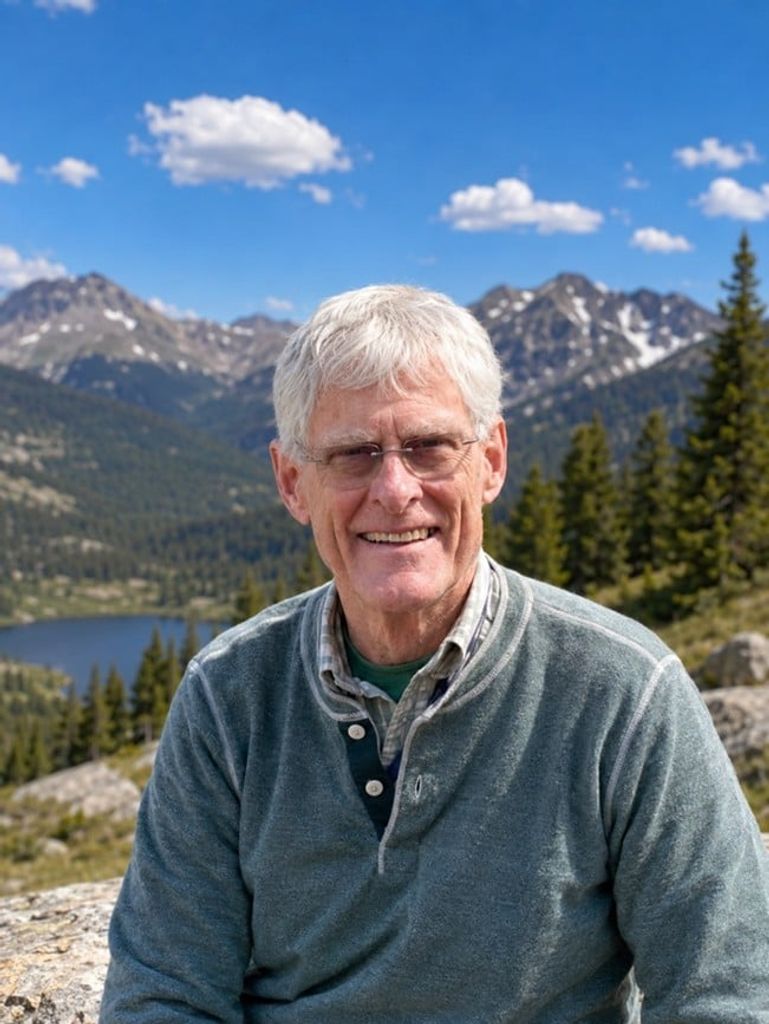
Dr. Raymond D. Watts


Dr. Raymond D. Watts
d. May 17, 2026
Raymond D. Watts lived a life of curiosity, adventure, intellect, humor, and deep human connection. He was a scientist, explorer, storyteller, husband, father, grandfather-to-be, brother, colleague, mentor, and friend whose life carried him from the mountains and coastlines of Southern California to the Moon, Antarctica, and countless places in between.
Ray passed away on May 17, 2026, surrounded by the love of his family, leaving behind not only an extraordinary scientific legacy, but also generations of stories, laughter, wisdom, and unforgettable memories.
Born and raised in Southern California, Ray grew up with an adventurous spirit and an insatiable curiosity about the natural world. He attended Santa Monica High School before continuing his education at Pomona College, the Massachusetts Institute of Technology, and eventually the University of Toronto, where he completed his Ph.D. in geophysics. Learning was never simply a career path for Ray — it was part of who he was. He was endlessly fascinated by how the world worked and driven by a desire to understand what lay beneath the surface of things.
That curiosity led him into some of the most remarkable scientific work of the twentieth century.
During the Apollo era, Ray contributed to lunar science associated with NASA's Apollo 17 mission, helping interpret electromagnetic data returned from the Moon. He belonged to a generation of scientists whose work expanded humanity's understanding of worlds beyond our own. Long before modern computing became commonplace, Ray was already working at the frontier of scientific data interpretation and remote sensing.
His scientific journey later sent him to Antarctica, where he helped pioneer radar methods used to measure the thickness and structure of polar ice. In recognition of his contributions to Antarctic science, a summit on that continent was named Watts Needle in his honor in 1979 — a distinction quietly reflecting the respect he earned within the scientific community. His work contributed to the growing understanding of glaciers, ice sheets, and the hidden landscapes buried beneath them.
Ray spent much of his career with the United States Geological Survey, where his work ranged from geophysics and remote sensing to environmental and spatial analysis. Over the decades, his research contributed to fields as varied as planetary science, glaciology, mapping, and conservation science. He was widely respected for his understanding of America's roadless landscapes and served as the principal researcher and first author of the Science article 'Roadless Space of the Conterminous United States.' Science remains the most sought-after journal for scientific publication.
But for all of his professional accomplishments, the people who loved Ray will remember far more than his résumé.
They will remember his warmth, intelligence, dry wit, brilliance with puns, generosity, and storytelling ability. They will remember conversations that wandered from science to philosophy to history to humor — often all at once. They will remember his deep love of the outdoors and a life filled with bodysurfing, skiing, hiking, climbing, kayaking, rivers, mountains, oceans, campfires, maps, adventures, and long walks and runs with Kona.
They will remember the way he could make people laugh.
They will remember his curiosity about nearly everything and his ability to make others curious, too.
They will remember the joy he found in sharing stories, ideas, and experiences with the people around him. Ray loved both discovery and connection, and he carried those gifts throughout his life.
Ray was never a man who fit neatly into a single category. He could be deeply analytical and deeply sentimental, intensely thoughtful and wonderfully funny. He approached life with bountiful intelligence, sincere humility, and a genuine appreciation for both the beauty of the natural world and the people he shared it with.
Most of all, Ray was deeply loved by his family.
To them, he was not the scientist whose work reached from the Moon to Antarctica. He was the son of Seymour (who died 30 years to the day before Ray) and Margaret Watts (also deceased). Ray was the husband who built a life of partnership and adventure with Beth. He was the best dad ever to his daughter, Kelly, the father-in-law of Kevin Wilkins, and the grandfather-to-be of a beautiful little girl who will grow up hearing many wonderful stories of her grandfather. He was the beloved and only brother of Judy McKinley, Carol Watts, Kathleen Watts, and Dorothy Dobson. He was the brother-in-law of Sue Fox, Barbara Lewis, Victor O'Brien, and Janet Bryant. Ray was the loving master of his loyal dog, Kona. Ray was a ready friend to many, with a presence that shaped their lives in countless ways. His family — and his friends as well — knew his kindness, his humor, his imperfections, his wisdom, and the enormous depth of his heart.
Ray's legacy lives not only in scientific publications, maps, and discoveries, but in stories told around dinner tables, photographs from adventures shared, lessons quietly passed down, and the impact he had on the people who loved him most.
A private celebration of life will be held at a future time. For those who wish to make a donation in Ray's memory, two of his favorite charities were The Nature Conservancy and The Sierra Club. The family also welcomes friends and loved ones to share stories, photographs, and memories on this memorial page so that the many chapters of Ray's life may continue to be remembered and celebrated.
Ray spent his life helping humanity better understand hidden worlds — beneath the Moon's surface, beneath Antarctic ice, and across the vast landscapes of Earth. But those closest to him know that his greatest legacy was never simply what he discovered.
It was the life he shared with others along the way.
Ray passed away on May 17, 2026, surrounded by the love of his family, leaving behind not only an extraordinary scientific legacy, but also generations of stories, laughter, wisdom, and unforgettable memories.
Born and raised in Southern California, Ray grew up with an adventurous spirit and an insatiable curiosity about the natural world. He attended Santa Monica High School before continuing his education at Pomona College, the Massachusetts Institute of Technology, and eventually the University of Toronto, where he completed his Ph.D. in geophysics. Learning was never simply a career path for Ray — it was part of who he was. He was endlessly fascinated by how the world worked and driven by a desire to understand what lay beneath the surface of things.
That curiosity led him into some of the most remarkable scientific work of the twentieth century.
During the Apollo era, Ray contributed to lunar science associated with NASA's Apollo 17 mission, helping interpret electromagnetic data returned from the Moon. He belonged to a generation of scientists whose work expanded humanity's understanding of worlds beyond our own. Long before modern computing became commonplace, Ray was already working at the frontier of scientific data interpretation and remote sensing.
His scientific journey later sent him to Antarctica, where he helped pioneer radar methods used to measure the thickness and structure of polar ice. In recognition of his contributions to Antarctic science, a summit on that continent was named Watts Needle in his honor in 1979 — a distinction quietly reflecting the respect he earned within the scientific community. His work contributed to the growing understanding of glaciers, ice sheets, and the hidden landscapes buried beneath them.
Ray spent much of his career with the United States Geological Survey, where his work ranged from geophysics and remote sensing to environmental and spatial analysis. Over the decades, his research contributed to fields as varied as planetary science, glaciology, mapping, and conservation science. He was widely respected for his understanding of America's roadless landscapes and served as the principal researcher and first author of the Science article 'Roadless Space of the Conterminous United States.' Science remains the most sought-after journal for scientific publication.
But for all of his professional accomplishments, the people who loved Ray will remember far more than his résumé.
They will remember his warmth, intelligence, dry wit, brilliance with puns, generosity, and storytelling ability. They will remember conversations that wandered from science to philosophy to history to humor — often all at once. They will remember his deep love of the outdoors and a life filled with bodysurfing, skiing, hiking, climbing, kayaking, rivers, mountains, oceans, campfires, maps, adventures, and long walks and runs with Kona.
They will remember the way he could make people laugh.
They will remember his curiosity about nearly everything and his ability to make others curious, too.
They will remember the joy he found in sharing stories, ideas, and experiences with the people around him. Ray loved both discovery and connection, and he carried those gifts throughout his life.
Ray was never a man who fit neatly into a single category. He could be deeply analytical and deeply sentimental, intensely thoughtful and wonderfully funny. He approached life with bountiful intelligence, sincere humility, and a genuine appreciation for both the beauty of the natural world and the people he shared it with.
Most of all, Ray was deeply loved by his family.
To them, he was not the scientist whose work reached from the Moon to Antarctica. He was the son of Seymour (who died 30 years to the day before Ray) and Margaret Watts (also deceased). Ray was the husband who built a life of partnership and adventure with Beth. He was the best dad ever to his daughter, Kelly, the father-in-law of Kevin Wilkins, and the grandfather-to-be of a beautiful little girl who will grow up hearing many wonderful stories of her grandfather. He was the beloved and only brother of Judy McKinley, Carol Watts, Kathleen Watts, and Dorothy Dobson. He was the brother-in-law of Sue Fox, Barbara Lewis, Victor O'Brien, and Janet Bryant. Ray was the loving master of his loyal dog, Kona. Ray was a ready friend to many, with a presence that shaped their lives in countless ways. His family — and his friends as well — knew his kindness, his humor, his imperfections, his wisdom, and the enormous depth of his heart.
Ray's legacy lives not only in scientific publications, maps, and discoveries, but in stories told around dinner tables, photographs from adventures shared, lessons quietly passed down, and the impact he had on the people who loved him most.
A private celebration of life will be held at a future time. For those who wish to make a donation in Ray's memory, two of his favorite charities were The Nature Conservancy and The Sierra Club. The family also welcomes friends and loved ones to share stories, photographs, and memories on this memorial page so that the many chapters of Ray's life may continue to be remembered and celebrated.
Ray spent his life helping humanity better understand hidden worlds — beneath the Moon's surface, beneath Antarctic ice, and across the vast landscapes of Earth. But those closest to him know that his greatest legacy was never simply what he discovered.
It was the life he shared with others along the way.
To send flowers with our preferred florist or plant a memorial tree, please visit our flower store.
Guestbook
Visits: 71
This site is protected by reCAPTCHA and the
Google Privacy Policy and Terms of Service apply.
Service map data © OpenStreetMap contributors